
Communicating Quality
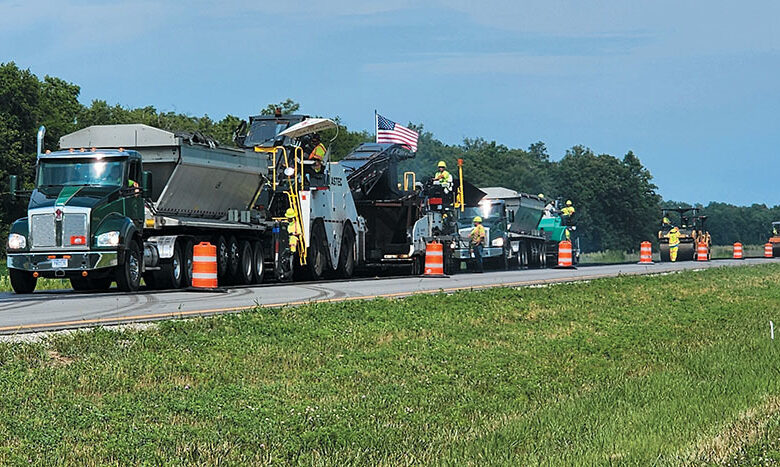
NAPA’s Quality in Construction Awards window runs through Oct. 31
There is plenty of pride to go around in the asphalt pavement industry.
From the crew members who drive their families past last year’s projects with a matter-of-fact “we paved that” to the folks at the plants, labs, and offices who feel the only pavement that matters is the next one, the industry runs on achieving performance and moving on.
The NAPA Awards program acts as a catalyst for that pride, using metrics to offer companies across the nation the chance to prove their standards do not come standard.
Quality in Construction Award entries include self-reporting sections as well as scores verified by third-party judges. Applications are divided between smaller projects using less than 50,000 tons of asphalt, and larger highway projects using 50,000 tons or more.
The highest-scoring 10 projects under 50K tons receive the Larry H. Lemon Award, while the best scores earn larger projects the opportunity to be named a Sheldon G. Hayes Award finalist.

QUALITY WIN
The U.S. 24 pavement rehabilitation effort that earned Gerken Paving Inc. a 2025 Quality in Construction Award was a rubblization and overlay project running 10 miles through Paulding and Defiance counties in Ohio.
As with any competition, there are perennial contenders. Ohio’s Shelly Holding Co., A CRH Co., for instance, has had at least one project named to the Larry H. Lemon list every year since 2020.
Companies that are proactive in empowering their quality control and quality assurance teams are often able to participate more often in NAPA Awards programming because data is collected as the paving season goes, not when applications open in August.

FORT TO PORT
Gerken’s project runs along a portion of the “Fort to Port” corridor between Fort Wayne and the Port of Toledo that was originally completed in 2008. Gerken had four projects earn QIC recognition in 2025.
Consistency can be key, too, as some companies elect to have the same employee submit their applications each year. Building that consistency can begin with asking for help: A NAPA staff member is always just an email away when an application is stuck or there are technical issues slowing down the process. This increased familiarity with the awards portal allows for more focus on the project assessment inputs.
NAPA Awards are intended to help companies put their best foot forward with their communities while proving their pavements meet national quality standards.

SINGLE-LANE SAFETYEDGE
Louisville Paving & Construction Co. in Kentucky earned a QIC Award for a rural, single-lane resurfacing project in Spencer County, which presented challenges in maintaining local traffic and material delivery logistics. The finished road included a SafetyEdge.
Winning projects become a point of pride for each company and crew member because whether it’s cruising past the project, receiving applause at the NAPA Annual Meeting, or sharing news of your win at the next career fair, it’s all part of telling the asphalt pavement industry’s story.

NEW ROADS IN OLDHAM
Louisville Paving won six QIC Awards in 2025, including one for a resurfacing project along various routes in Oldham County.
For a full exploration of the NAPA Awards program, access the latest webinar, Stand Out as an Industry Leader: Master NAPA’s Awards & Diamond Commendations Applications, from the NAPA Resource Center at AsphaltPavement.org/Resources.

COMMUNICATION & QUALITY
The Milton- St. Albans project on Interstate 89, a main artery leading to the largest Port for Canada in Vermont, earned Pike Industries, A CRH Co., one of its 10 QIC Awards in 2025. Besides Canadian traffic, the road is also a route for ferry commuters crossing the New York state line. Pike opted for the safest and most efficient approach: working in restricted areas at night, leading to night and day work happening simultaneously. This overlap between night and day work meant communication was the backbone of the project.