Portions of this content appeared in the Summer 2025 print edition of NAPA Quarterly. Subscribe here.
States, contractors consider approaches to include higher percentages of reclaimed asphalt pavement (RAP) in asphalt mixes.
By Jean Paul-Fort
NAPA Pavement Engineering & Innovation Director
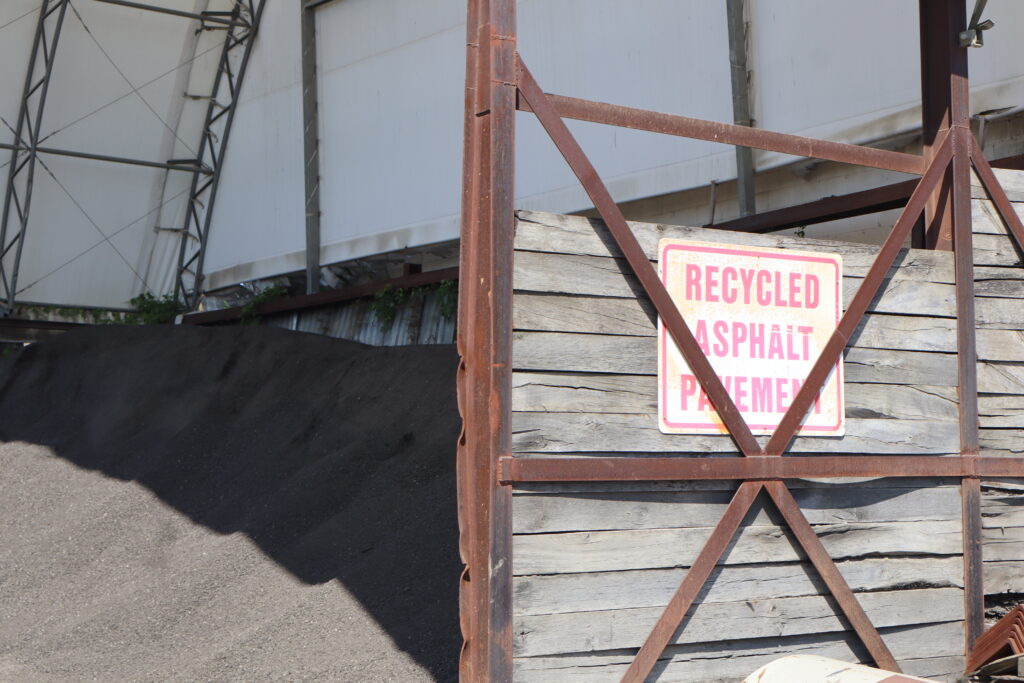
Reclaimed asphalt pavement (RAP) is having its heyday in some states, while others have been slower to come around to its use in surface mixes.
The differences across state lines aren’t all driven by policy, however. National Center for Asphalt Technology (NCAT) Director Randy West said many states are seeking to keep mix costs down, while others, like Florida, are looking to RAP as a solution to its regional aggregate shortages.
FLORIDA’S HISTORY WITH RAP

“Florida DOT’s history with RAP goes back to the 1970s. The test sections that were built in the late ‘70s led to Florida’s first RAP specification in 1980, and it was pretty permissive specification, allowing up to 60% RAP in mixes. But it excluded RAP from what Florida calls their surface layers,” West said. “That specification was in place when I worked there at Florida DOT in the late ‘80s and early ‘90s.”
By 2000, West said three things happened that led Florida to reconsider its specification: the introduction of SuperPave, the implementation of quality assurance specifications using the percent within limits approach, and the increased use of polymer-modified binders.
“All three of those things combined resulted in a significant drop in the average RAP content from what it had been the 20 years prior to that,” he said. “It went from an average RAP content of about 30 to 35%, down to about 25%.”
West said that population growth over the past two decades has led Florida to reconsider its RAP specifications, as contractors in the Sunshine State face significant aggregate shortages. The remaining aggregate sources, all concentrated in the bottom third of the peninsula, are dwindling, and the state is already bringing in aggregate from Alabama, Georgia, Canada and Mexico.
To combat the effects of the aggregate shortage, Florida is now considering allowing more RAP in its asphalt mixes, which West points out makes the state somewhat unusual among most states that consider the economics of RAP usage to be driven by binder replacement.
“One of the things that they’re looking at right now for the DOT is trying to increase the RAP content in mixes that they currently do not allow RAP,” he said, noting they are conducting research on allowing some RAP in open-graded friction course mixtures and mixtures containing highly-modified binders. “Florida has allowed RAP in dense-graded friction courses and mixtures containing standard polymer-modified binders since 2010.”
RAP AT THE PLANT
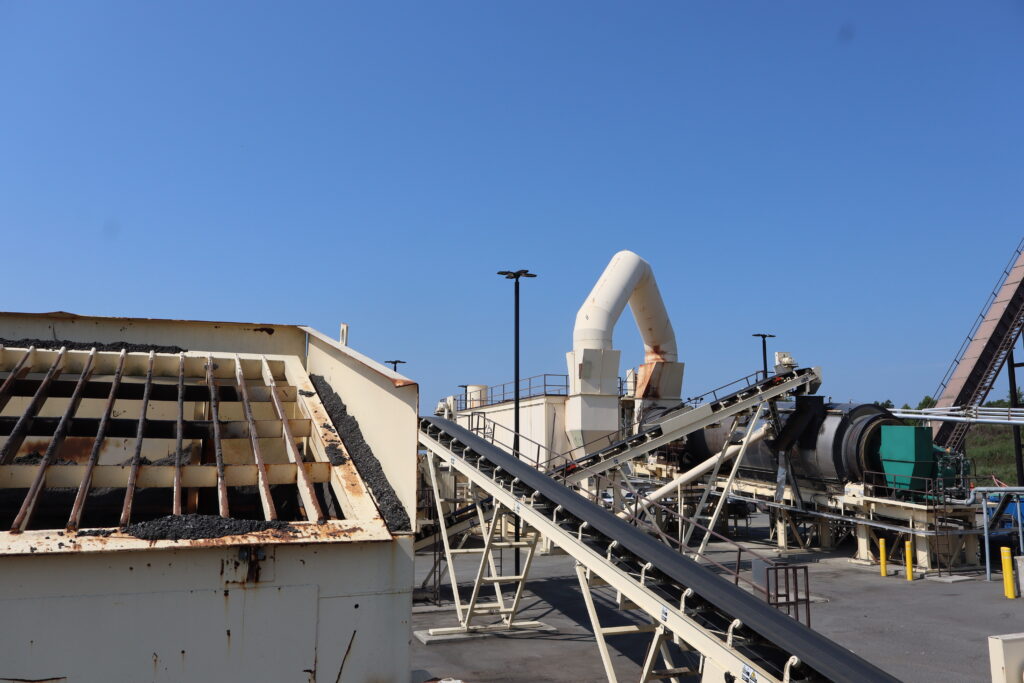
In Washington State, Granite Director of Materials Quality Marty McNamara said asphalt mix plants have adapted to WSDOT’s specification which allows up to 40% binder replacement using RAP, RAS, or a combination of these two recycled products. McNamara identified three key factors crucial for achieving these higher RAP percentages.
First, McNamara highlighted the importance of fully understanding virgin asphalt binder properties. “Not all binders are equal, even if they meet the same specifications,” he explained. The properties of the virgin binder directly impact how much RAP can be included while still meeting DOT specifications.
Second, he stressed that having a good RAP management plan is critical. This includes required tests, testing frequency, and management practices. “Not all RAP is created equal, either” McNamara noted. Understanding materials differences and managing them is the key to ensuring final mix quality and performance.
Lastly, McNamara pointed out specific plant adjustments that facilitated higher RAP usage. “Reconfiguring flights and using variable frequency drives (VFDs) on our drum was a game changer,” he said, explaining that achieving sufficient mixing time and proper temperatures is crucial for high-RAP mixes. He also noted the importance of using the baghouse to control fines in the mix, essential for meeting production volumetric requirements.
EVALUATING CCPR

In 2012, NCAT built its first Cold Central Plant Recycling (CCPR) section on the NCAT Test Track for Virginia DOT using materials and equipment brought from the Commonwealth. “They wanted to know what structural coefficient to assign CCPR for future interstate work,” said Buzz Powell, then NCAT Assistant Director for Test Track Research. The foamed cold recycled mix came from a dedicated mobile CCPR plant. Leftover material was placed on Lee Road 159: “We milled 5.5 inches, put in the CCPR, and topped it with a 3/4-inch Thinlay,” he said. “That was 2012. Thirteen years later, it’s still one of the best sections on Lee Road 159.”
Powell often asked himself what he’d do in a contractor’s shoes. “If that was my plant and I was a small contractor, I’d want to know—what’s it like to produce CCPR? How does it haul, pave, compact? If it worked, can I sell it to cities and counties and build a market?”
In 2015, he got that chance. CCPR was placed on US 280 using local RAP and a mobile plant. At the same time, a failed Test Track section needed rebuilding. With surplus RAP available, Powell saw an opportunity: use a Double Barrel Green plant to produce CCPR as proof of concept.
“It worked because the double barrel’s outer chamber is designed to have the same mixing efficiency as a pugmill.” Powell explained. “But we had to make a few tweaks. First, the drum had to be cold—so we let it cool overnight and ran in the morning. The RAP collar couldn’t handle enough material, so we fed half through a cold feed bin. We added water at the RAP inlet with a retrofit dust control ring to get the moisture right. Portland cement? We used a blower through the fiber feed port. And the foamed asphalt came from the plant’s own Astec Green System.”
“We paved in the morning and placed a hot mix overlay that afternoon. When we finally removed that section, it had handled 20 million ESALs and had zero distresses. I believed it was a Perpetual Pavement.”
“I wouldn’t recommend doing it this way long-term, but as a proof of concept—absolutely. See if it works for you in your market, and if it does, then invest in dedicated equipment to run higher volumes more efficiently.”