NAPA Traverses America to Promote Highway Bill Reauthorization
A version of this story originally appeared in the Fall 2026 issue of NAPA Quarterly. Subscribe now.
From the halls of Congress to the control room of an asphalt plant in West Virginia, the asphalt pavement industry is telling its story.
With the nation’s current surface transportation authorization nearing expiration, NAPA members have worked relentlessly in 2026 to ensure lawmakers understand the vital role asphalt pavement plays in connecting communities, supporting local economies, and maintaining America’s transportation network.
While critical work is ongoing in Washington, much of this effort extends far beyond the D.C. bubble.
NAPA members have opened their facilities to lawmakers and welcomed elected officials onto job sites to showcase the work that goes into building and maintaining the roads Americans rely on every day. As Congress debates the future of federal transportation investment, the industry is making sure those conversations are grounded in real-world experience.
“Nothing replaces seeing it firsthand,” said NAPA Vice President of Government Affairs Nile Elam. “When lawmakers visit a plant or a project site, they can meet the people doing the work, see how infrastructure dollars are being invested, and better understand the challenges and opportunities facing our industry.”
As Congress debates the future of federal transportation investment, the industry is making sure those conversations are grounded in real-world experience.
BRINGING THE HIGHWAY BILL HOME
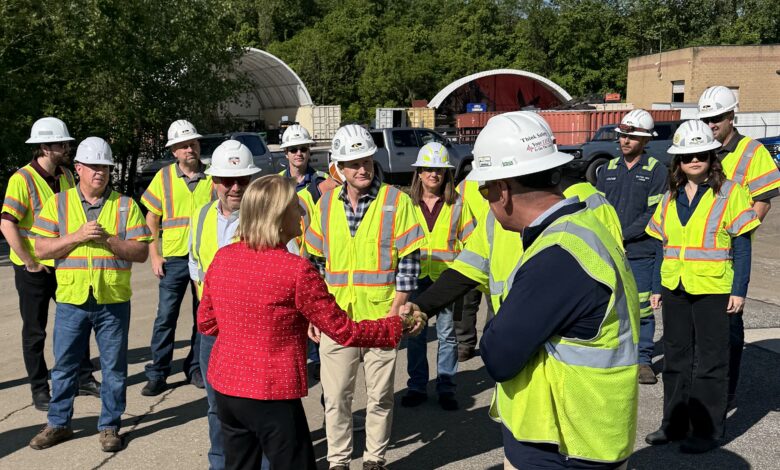
Parkersburg, West Virginia, was sunny and brisk on a Wednesday morning in early May when Sen. Shelley Moore Capito (R-WV) visited Camden Materials to meet with asphalt pavement industry leaders, hear from employees, and discuss the future of America’s transportation network.

Capito toured the facility, explored plant operations, and even loaded trucks with asphalt mix. Joined by representatives from the Asphalt Pavement Association of West Virginia, West Virginia Paving, Kelly Paving, and NAPA, discussions focused on maintaining and modernizing the nation’s roads and highways, improving project delivery, enhancing work zone safety, and ensuring long-term federal investment in infrastructure.
As chair of the Senate Environment and Public Works Committee, Capito understands the stakes as well as anyone.
Federal transportation programs provide the framework and funding that support highway, bridge, and transit projects nationwide. Without congressional action, uncertainty could ripple through state programs and delay investments communities depend on.
Conversely, long-term certainty allows states to plan projects, contractors to invest in equipment and workforce development, and communities to advance critical infrastructure improvements that support economic growth and connectivity.
A NATIONWIDE EFFORT
The conversations taking place in Parkersburg have been happening across the country at a record pace this year.
NAPA has helped facilitate more than 30 tours so far this year. At the same time, NAPA PAC recorded the strongest fundraising year in its history, raising roughly $240,000 during the first half of 2026 alone.
Together, those efforts reflect an industry increasingly focused on ensuring its voice is heard as major transportation policy decisions are made.
In the weeks after the BUILD America 250 Act was introduced, NAPA PAC leaders met with both Speaker Mike Johnson and House Minority Leader Hakeem Jeffries to discuss the need for timely action on a new highway bill.

And while meetings in Washington remain important, much of the industry’s advocacy has occurred far from Capitol Hill.
In March, NAPA hosted a transportation-focused I-94 project tour in Minnesota featuring Transportation and Infrastructure Committee Chairman Sam Graves, Committee member Pete Stauber, and Majority Whip Tom Emmer. The tour provided an opportunity to discuss transportation policy while showcasing the impact infrastructure investment has on local communities.
In May, Rep. Andy Barr visited Louisville Paving and Construction in Kentucky. Joined by representatives from NAPA and the Plantmix Asphalt Industry of Kentucky, Barr toured operations and learned more about the skill, technology, and workforce required to produce high-quality asphalt pavement.
For many lawmakers, these visits provide a rare opportunity to see the full scope of the industry. They meet equipment operators, quality control technicians, truck drivers, engineers, and plant personnel. They see sophisticated production facilities, observe active construction projects, and learn how federal transportation policy translates into improvements on roads in their own districts.
For industry members, the visits offer an opportunity to demonstrate the value they provide to communities every day.
“These visits help illustrate how transportation investments support local economies, create jobs, and improve quality of life,” Elam said.
DECISIONS THAT SHAPE THE FUTURE
The industry’s engagement comes at a pivotal moment. Decisions being made today will influence how states plan projects, how contractors invest in their businesses, and how communities maintain and improve their transportation systems for years to come.
For NAPA and its members, advocacy is about more than supporting a bill. It is about helping policymakers understand the people, plants, and projects behind the nation’s transportation network.
Whether in a committee hearing room, a congressional office, an asphalt plant, or along a busy highway corridor, the message remains the same: sustained investment in transportation infrastructure matters.
And throughout 2026, the asphalt pavement industry has been making sure that message is heard.
The Senate passed a short-term extension of expiring surface transportation programs as part of a broader government funding package by a 90-6 vote on Aug. 8. The measure would push the deadline for renewing surface transportation programs to Dec. 11.
NAPA continues to advocate for House passage of the BUILD America 250 Act, a five-year $580 billion bipartisan reauthorization bill, while urging for a robust long-term surface transportation bill in the Senate.
In a statement, NAPA President & CEO Audrey Copeland highlighted the challenges of short-term extensions while expressing optimism that Congress will pass a long-term reauthorization bill this year.
“A short-term extension is not a substitute for the long-term certainty both states and industry require to invest in their communities and our highway system,” she said. “We remain hopeful that this extra time spurs Congress to enact the BUILD America 250 Act this year. NAPA and our dedicated members are ready to engage with lawmakers to finish the job and get to work.”
TRACKING THE BUILD AMERICA 250 ACT
As Congress develops the next long-term highway bill, NAPA is closely tracking the process, advancing industry priorities, and ensuring the asphalt pavement industry’s voice is heard.
The Advocacy section at the new AsphaltPavement.org includes a bill tracker page that brings together all of the latest updates on legislation, news from trusted outlets, letters on behalf of industry, and a timeline of major legislative actions.
Use NAPA’s Highway Bill Tracker to keep tabs on the latest from Washington, including how you can play a part in assuring predictable and robust funding for highway construction continues to move the asphalt pavement industry forward.
For NAPA and its members, advocacy is about more than supporting a bill. It is about helping policymakers understand the people, facilities, and projects behind the nation’s transportation network.
As of this writing, the BUILD America 250 Act – which NAPA strongly endorses – represents Congress’s leading effort to reauthorize federal surface transportation programs. The bipartisan legislation would provide approximately $580 billion over five years while establishing policies to modernize and strengthen the nation’s transportation network.
Meanwhile, the Senate continues its work on companion legislation.
“We have work ahead of us to reach a bipartisan agreement,” Capito said during a June hearing. “I am committed to working with our partner committees in the Senate and colleagues in the House to deliver a bill to the president’s desk.”