
EAPA releases latest ‘Asphalt in Figures’
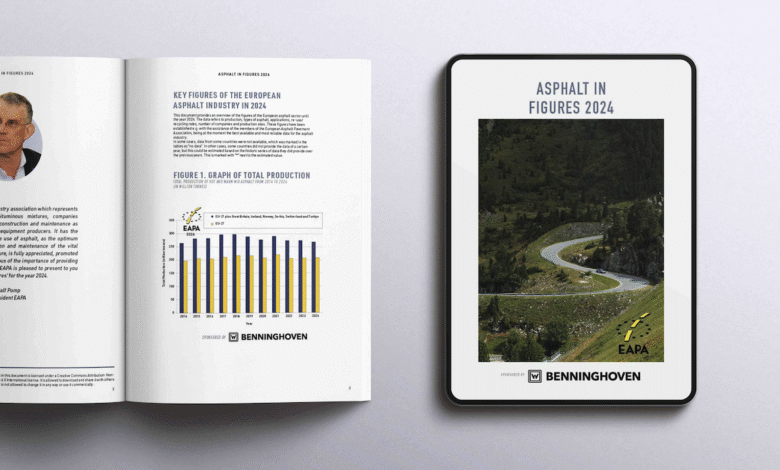
The European Asphalt Pavement Association (EAPA) announced the release of the latest production data for the European asphalt industry this month.
The free PDF version of Asphalt in Figures 2024 offers a concise overview of trends and statistics from across Europe. Enhanced versions of the report are available as well, with additional commentary from EAPA subject matter experts.
“The latest data confirms the asphalt industry’s commitment to Europe’s decarbonization and sustainability goals, by increasing the production at lower temperatures (Warm Mix Asphalt) and maintaining outstanding levels of circular economy practices.
However, this year’s production represents the lowest level of the last three decades, with the only exception of the year 2014, the worst after the financial crisis of 2008. Chronic underinvestment in Europe’s road infrastructure can steadily erode its reliability and resilience, while increasing the risk of disruption and reduced connectivity in the years ahead
Without decisive action, deteriorating roads will undermine mobility, competitiveness, and regional cohesion. This situation calls for an urgent shift toward sustained financial commitment, long-term strategic planning, and coordinated policy efforts to preserve, modernize, and future-proof the essential European road network.”
EAPA highlights from the report
Historic production low
Total European asphalt production reached 268.7 million tonnes in 2024, the lowest level recorded in the past three decades, with the sole exception of 2014 following the financial crisis.
Strong circular economy performance
Seventy-three percent of the reclaimed asphalt available to companies of the sector in reporting countries was reused, while 24% was recycled.
Warm Mix Asphalt continues to grow
The production of WMA continued growing in 2024 with some countries reporting values around 30 percent of their total production.

