New Manual Addresses Key Asphalt Challenge
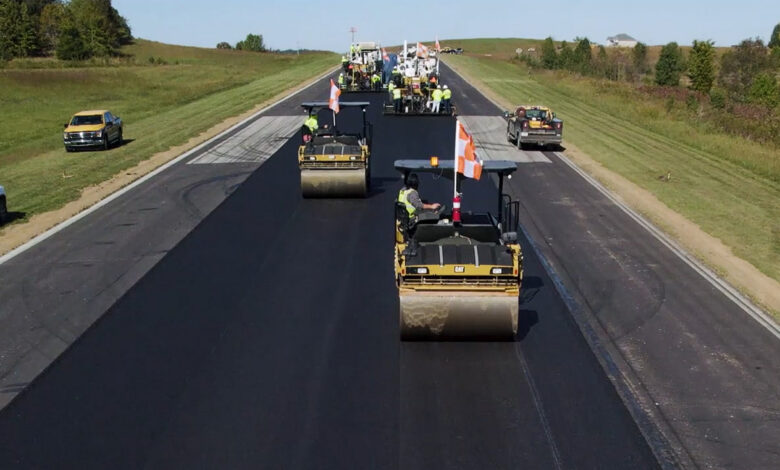

Longitudinal joints have historically been one of the most difficult areas to maintain on airport runways and taxiways. Their higher permeability can increase the risk of water infiltration, oxidation, and aging, which may contribute to foreign object debris and maintenance needs. Even with the Federal Aviation Administration (FAA) requirements for cutting back joints and applying tack coat on the joint face, joint maintenance remains an area where additional guidance is valuable.
The Best Practices Manual for Longitudinal Joint Maintenance compiles years of research, engineering insights, and contractor experience into clear, step-by-step guidance to help preserve asphalt airfield pavements. The manual was released through the Airport Asphalt Pavement Technology Program, a cooperative agreement between the FAA and NAPA.
“This project transformed decades of lessons learned into practical guidance,” said NAPA Senior Director for Engineering and Technical Services Brett Williams. “Airport engineers now have clear, reliable direction that aligns FAA standards with field-proven practices.”

STRONGER JOINTS. LONGER PAVEMENT LIFE.
This new best practices manual provides step-by-step guidance, treatment selection tools, and insights on innovative materials for longitudinal joint maintenance.
Download The Best Practices Manual for Longitudinal Joint Maintenance now.
PRACTICAL STRATEGIES
The new manual provides airports and their design consultants with a structured, fieldtested playbook to help determine when and how to seal, repair, or replace joints, supporting more proactive and effective maintenance planning. It explains when and how to apply each maintenance technique based on distress severity. With minor cracking, for example, it outlines how proper crack sealing can stop water intrusion and extend pavement life. For moderate deterioration, partial-depth repairs can help restore structural integrity and smoothness, while a more advanced stage of joint distress may call for full-depth repairs to provide lasting performance.

INNOVATIVE MATERIALS
In addition to established practices, the manual highlights innovative materials that show strong potential to extend the service life of longitudinal joints. These include mastic sealants, joint adhesives, void-reducing asphalt membranes (VRAM), rapid-penetrating emulsions (RPE), and penetrating sealers. Early field results are encouraging, and ongoing evaluations will help determine how these materials may be incorporated into future FAA standards.
“Airports are actively seeking solutions that reduce maintenance needs and enhance pavement performance,” said National Center for Asphalt Technology (NCAT) Director Randy West. “Products like VRAM and RPE show real promise, and continued data collection will help us understand how they perform under airfield operating conditions.”
NCAT, in partnership with Applied Pavement Technology and Iowa State University, led the manual’s development. Researchers evaluated highway and airport projects using VRAM and RPE, visited existing installations, and built new test sections in Alabama and Kentucky to collect long-term performance data. These test sites will help determine how well these materials resist cracking and water infiltration over time.
The Best Practices Manual for Longitudinal Joint Maintenance provides more than technical recommendations; it gives airports a clear, structured approach to joint preservation. Repair options and treatment selection criteria are organized based on joint condition, helping airport teams make confident, consistent decisions.
“The goal was to create something maintenance managers can put into practice,” said Williams. “It’s about translating research into reliable, repeatable results.”
Learn more about this AAPTP project and others at AirportAsphalt.com.